Girl Guiding & Girl Scouting
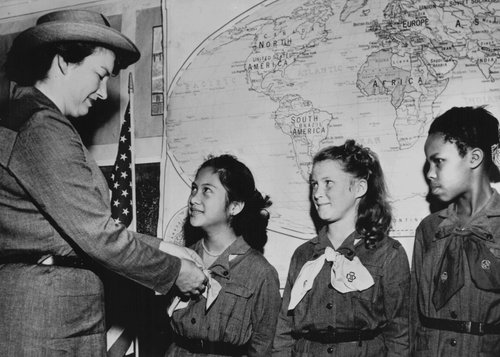
In 1909, a group of girls appeared at a Boy Scout Rally in the UK declaring
themselves to be Girl Scouts. Lord Robert Baden-Powell, the founder of Boy
Scouts, decided that there should be a Movement for girls.
Guiding was introduced that same year to respond to the specific needs of
girls and young women. Groups of Girl Guides soon started in Australia,
Canada, Denmark, Finland, New Zealand and South Africa.
A year later, the Girl Guide Association was officially established in the
UK under the leadership of Agnes Baden-Powell, Robert’s sister. By 1912
there were also groups in Ireland, Portugal, Norway and Juliette Low founded
Girl Scouting in the USA in 1912.
The movement continued to grow over the years, and today there are Girl
Guide or Girl Scouts Associations in 150 countries!
The First World Conference held in England, in 1920 was a historic occasion
that gave representatives of the Girl Guiding and Girl Scouting world the
opportunity to meet and exchange ideas and experiences. This contributed to
not only a heightened and strengthened international scouting and guiding
experience, but it also raised the awareness and profile of the movement.
Girl Guiding and Girl Scouting became known to the International Council
and, for the first time, groups began to plan trips abroad, with the First
World Camp organized to coincide with the Third International Conference, in
1924, Foxlease, UK, and brought 1,100 girls and young women together from 40
countries.
As the Movement grew and expanded, country representatives began to feel
that it was time to create something more solid and binding and the idea of
forming a world association was proposed after the 4th World Conference in
1926.
The founder of the Movement, Lord Robert Baden-Powell, sought the opinions
of all known Girl Guide and Girl Scout organizations and asked them to
consider the proposition. Delegates from 26 countries met at the Ffith
International Conference in Hungary in 1928, and formed the World
Association of Girl Guides and Girl Scouts (WAGGGS), with a World Bureau as
its secretariat to be located in London, replacing an advisory body, the
International Council created in 1919.
It was decided that the newly founded World Association would hold elections
to determine a World Committee, of which Lord and Lady Baden-Powell, and the
Director of the World Bureau, would be ex-officio members. International
Conferences (now known as World Conferences) take place once every three
years and to this day remain a platform for policy and decision making for
Member Organizations.
The First World Conference was instrumental in shaping the collective
experience of Girl Guiding and Scouting Scouting, in bringing a number of
countries together to share their vision of the movement, shape the future
and direction of the Guiding and Scouting World – a legacy which
The importance of guiding
Guiding is necessary for students at school level since this subject helps
to develop the character of the students and to prepare them to be
responsible citizens in the near future. Guiding is considered to promote
team spirit, patriotism, social consciousness and habit of discipline in the
students.
Different types of activities are conducted like guide sign, salute, badge,
flag, signals, wood craft or tracking knots and their uses lashing camp
gadgets compass fires for warmth and light, fires for cooking, first –aid,
bandages etc.
Guiding Teachers
-
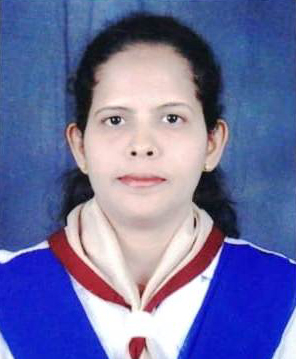
Tr. Neetal Falcao
-

Tr. Cynthia D'mello

Tr. Sophia Cardoza
Tr. Oriliya Gonsalves